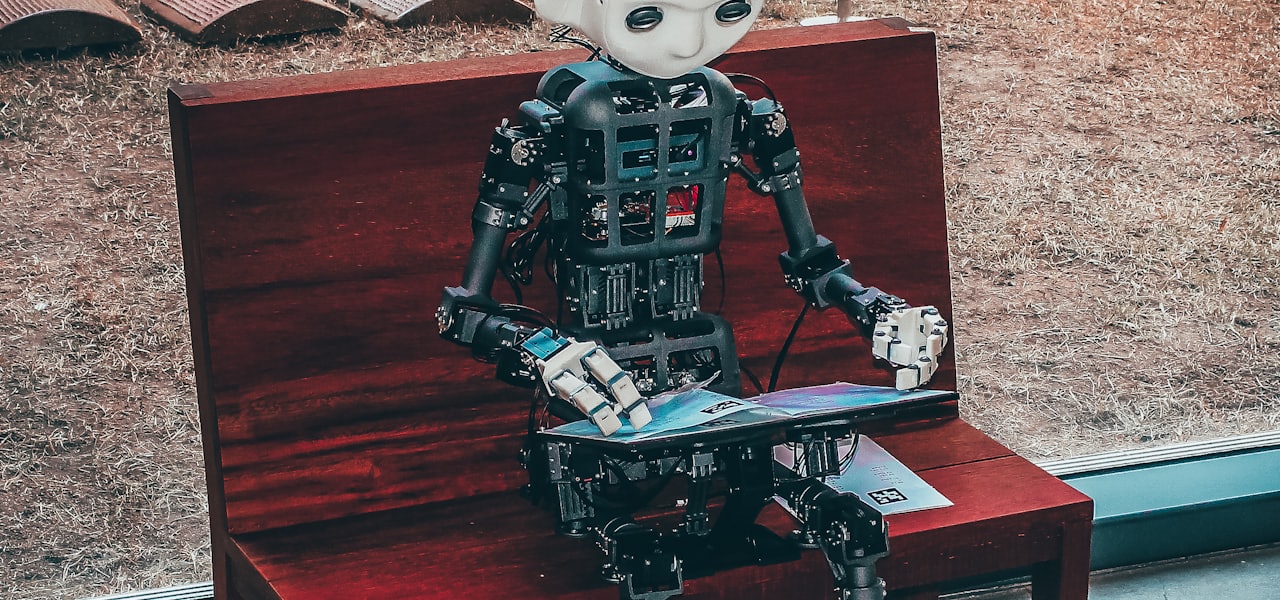
A data janitor is a person who works to take big data and condense it into useful amounts of information. Also known as a "data wrangler", a data janitor sifts through data for companies in the information technology industry. A multitude of start-ups rely on large amounts of data, so a data janitor works to help these businesses with this basic, but difficult process of interpreting data. While it is a commonly held belief that data janitor work is fully automated, many data scientists are employed primarily as data janitors. The information technology industry has been increasingly turning towards new sources of data gathered on consumers, so data janitors have become more commonplace in recent years.
PhyCV
PhyCV is the first computer vision library which utilizes algorithms directly derived from the equations of physics governing physical phenomena. The algorithms appearing in the first release emulate the propagation of light through a physical medium with natural and engineered diffractive properties followed by coherent detection. Unlike traditional algorithms that are a sequence of hand-crafted empirical rules, physics-inspired algorithms leverage physical laws of nature as blueprints. In addition, these algorithms can, in principle, be implemented in real physical devices for fast and efficient computation in the form of analog computing. Currently PhyCV has three algorithms, Phase-Stretch Transform (PST) and Phase-Stretch Adaptive Gradient-Field Extractor (PAGE), and Vision Enhancement via Virtual diffraction and coherent Detection (VEViD). All algorithms have CPU and GPU versions. PhyCV is now available on GitHub and can be installed from pip. == History == Algorithms in PhyCV are inspired by the physics of the photonic time stretch (a hardware technique for ultrafast and single-shot data acquisition). PST is an edge detection algorithm that was open-sourced in 2016 and has 800+ stars and 200+ forks on GitHub. PAGE is a directional edge detection algorithm that was open-sourced in February, 2022. PhyCV was originally developed and open-sourced by Jalali-Lab @ UCLA in May 2022. In the initial release of PhyCV, the original open-sourced code of PST and PAGE is significantly refactored and improved to be modular, more efficient, GPU-accelerated and object-oriented. VEViD is a low-light and color enhancement algorithm that was added to PhyCV in November 2022. == Background == === Phase-Stretch Transform (PST) === Phase-Stretch Transform (PST) is a computationally efficient edge and texture detection algorithm with exceptional performance in visually impaired images. The algorithm transforms the image by emulating propagation of light through a device with engineered diffractive property followed by coherent detection. It has been applied in improving the resolution of MRI image, extracting blood vessels in retina images, dolphin identification, and waste water treatment, single molecule biological imaging, and classification of UAV using micro Doppler imaging. === Phase-Stretch Adaptive Gradient-Field Extractor (PAGE) === Phase-Stretch Adaptive Gradient-Field Extractor (PAGE) is a physics-inspired algorithm for detecting edges and their orientations in digital images at various scales. The algorithm is based on the diffraction equations of optics. Metaphorically speaking, PAGE emulates the physics of birefringent (orientation-dependent) diffractive propagation through a physical device with a specific diffractive structure. The propagation converts a real-valued image into a complex function. Related information is contained in the real and imaginary components of the output. The output represents the phase of the complex function. === Vision Enhancement via Virtual diffraction and coherent Detection (VEViD) === Vision Enhancement via Virtual diffraction and coherent Detection (VEViD) an efficient and interpretable low-light and color enhancement algorithm that reimagines a digital image as a spatially varying metaphoric light field and then subjects the field to the physical processes akin to diffraction and coherent detection. The term “Virtual” captures the deviation from the physical world. The light field is pixelated and the propagation imparts a phase with an arbitrary dependence on frequency which can be different from the quadratic behavior of physical diffraction. VEViD can be further accelerated through mathematical approximations that reduce the computation time without appreciable sacrifice in image quality. A closed-form approximation for VEViD which we call VEViD-lite can achieve up to 200 FPS for 4K video enhancement. == PhyCV on the Edge == Featuring low-dimensionality and high-efficiency, PhyCV is ideal for edge computing applications. In this section, we demonstrate running PhyCV on NVIDIA Jetson Nano in real-time. === NVIDIA Jetson Nano Developer Kit === NVIDIA Jetson Nano Developer Kit is a small- sized and power-efficient platform for edge computing applications. It is equipped with an NVIDIA Maxwell architecture GPU with 128 CUDA cores, a quad-core ARM Cortex-A57 CPU, 4GB 64-bit LPDDR4 RAM, and supports video encoding and decoding up to 4K resolution. Jetson Nano also offers a variety of interfaces for connectivity and expansion, making it ideal for a wide range of AI and IoT applications. In our setup, we connect a USB camera to the Jetson Nano to acquire videos and demonstrate using PhyCV to process the videos in real-time. === Real-time PhyCV on Jetson Nano === We use the Jetson Nano (4GB) with NVIDIA JetPack SDK version 4.6.1, which comes with pre- installed Python 3.6, CUDA 10.2, and OpenCV 4.1.1. We further install PyTorch 1.10 to enable the GPU accelerated PhyCV. We demonstrate the results and metrics of running PhyCV on Jetson Nano in real-time for edge detection and low-light enhancement tasks. For 480p videos, both operations achieve beyond 38 FPS, which is sufficient for most cameras that capture videos at 30 FPS. For 720p videos, PhyCV low-light enhancement can operate at 24 FPS and PhyCV edge detection can operate at 17 FPS. == Highlights == === Modular Code Architecture === The code in PhyCV has a modular design which faithfully follows the physical process from which the algorithm was originated. Both PST and PAGE modules in the PhyCV library emulate the propagation of the input signal (original digital image) through a device with engineered diffractive property followed by coherent (phase) detection. The dispersive propagation applies a phase kernel to the frequency domain of the original image. This process has three steps in general, loading the image, initializing the kernel and applying the kernel. In the implementation of PhyCV, each algorithm is represented as a class in Python and each class has methods that simulate the steps described above. The modular code architecture follows the physics behind the algorithm. Please refer to the source code on GitHub for more details. === GPU Acceleration === PhyCV supports GPU acceleration. The GPU versions of PST and PAGE are built on PyTorch accelerated by the CUDA toolkit. The acceleration is beneficial for applying the algorithms in real-time image video processing and other deep learning tasks. The running time per frame of PhyCV algorithms on CPU (Intel i9-9900K) and GPU (NVIDIA TITAN RTX) for videos at different resolutions are shown below. Note that the PhyCV low-light enhancement operates in the HSV color space, so the running time also includes RGB to HSV conversion. However, for all running times using GPUs, we ignore the time of moving data from CPUs to GPUs and count the algorithm operation time only. == Installation and Examples == Please refer to the GitHub README file for a detailed technical documentation. == Current Limitations == === I/O (Input/Output) Bottleneck for Real-time Video Processing === When dealing with real-time video streams from cameras, the frames are captured and buffered in CPU and have to be moved to GPU to run the GPU-accelerated PhyCV algorithms. This process is time-consuming and it is a common bottleneck for real-time video-processing algorithms. === Lack of Parameter Adaptivity for Different Images === Currently, the parameters of PhyCV algorithms have to be manually tuned for different images. Although a set of pre-selected parameters work relatively well for a wide range of images, the lack of parameter adaptivity for different images remains a limitation for now.
Data deduplication
In computing, data deduplication is a technique for eliminating duplicate copies of repeating data. Successful implementation of the technique can improve storage utilization, which may in turn lower capital expenditure by reducing the overall amount of storage media required to meet storage capacity needs. It can also be applied to network data transfers to reduce the number of bytes that must be sent. The deduplication process requires comparison of data 'chunks' (also known as 'byte patterns') which are unique, contiguous blocks of data. These chunks are identified and stored during a process of analysis, and compared to other chunks within existing data. Whenever a match occurs, the redundant chunk is replaced with a small reference that points to the stored chunk. Given that the same byte pattern may occur dozens, hundreds, or even thousands of times (the match frequency is dependent on the chunk size), the amount of data that must be stored or transferred can be greatly reduced. A related technique is single-instance (data) storage, which replaces multiple copies of content at the whole-file level with a single shared copy. While possible to combine this with other forms of data compression and deduplication, it is distinct from newer approaches to data deduplication (which can operate at the segment or sub-block level). Deduplication is different from data compression algorithms, such as LZ77 and LZ78. Whereas compression algorithms identify redundant data inside individual files and encodes this redundant data more efficiently, the intent of deduplication is to inspect large volumes of data and identify large sections – such as entire files or large sections of files – that are identical, and replace them with a shared copy. == Functioning principle == For example, a typical email system might contain 100 instances of the same 1 MB (megabyte) file attachment. Each time the email platform is backed up, all 100 instances of the attachment are saved, requiring 100 MB storage space. With data deduplication, only one instance of the attachment is actually stored; the subsequent instances are referenced back to the saved copy for deduplication ratio of roughly 100 to 1. Deduplication is often paired with data compression for additional storage saving: Deduplication is first used to eliminate large chunks of repetitive data, and compression is then used to efficiently encode each of the stored chunks. In computer code, deduplication is done by, for example, storing information in variables so that they don't have to be written out individually but can be changed all at once at a central referenced location. Examples are CSS classes and named references in MediaWiki. == Benefits == Storage-based data deduplication reduces the amount of storage needed for a given set of files. It is most effective in applications where many copies of very similar or even identical data are stored on a single disk. In the case of data backups, which routinely are performed to protect against data loss, most data in a given backup remain unchanged from the previous backup. Common backup systems try to exploit this by omitting (or hard linking) files that haven't changed or storing differences between files. Neither approach captures all redundancies, however. Hard-linking does not help with large files that have only changed in small ways, such as an email database; differences only find redundancies in adjacent versions of a single file (consider a section that was deleted and later added in again, or a logo image included in many documents). In-line network data deduplication is used to reduce the number of bytes that must be transferred between endpoints, which can reduce the amount of bandwidth required. See WAN optimization for more information. Virtual servers and virtual desktops benefit from deduplication because it allows nominally separate system files for each virtual machine to be coalesced into a single storage space. At the same time, if a given virtual machine customizes a file, deduplication will not change the files on the other virtual machines—something that alternatives like hard links or shared disks do not offer. Backing up or making duplicate copies of virtual environments is similarly improved. == Classification == === Post-process versus in-line deduplication === Deduplication may occur "in-line", as data is flowing, or "post-process" after it has been written. With post-process deduplication, new data is first stored on the storage device and then a process at a later time will analyze the data looking for duplication. The benefit is that there is no need to wait for the hash calculations and lookup to be completed before storing the data, thereby ensuring that store performance is not degraded. Implementations offering policy-based operation can give users the ability to defer optimization on "active" files, or to process files based on type and location. One potential drawback is that duplicate data may be unnecessarily stored for a short time, which can be problematic if the system is nearing full capacity. Alternatively, deduplication hash calculations can be done in-line: synchronized as data enters the target device. If the storage system identifies a block which it has already stored, only a reference to the existing block is stored, rather than the whole new block. The advantage of in-line deduplication over post-process deduplication is that it requires less storage and network traffic, since duplicate data is never stored or transferred. On the negative side, hash calculations may be computationally expensive, thereby reducing the storage throughput. However, certain vendors with in-line deduplication have demonstrated equipment which performs in-line deduplication at high rates. Post-process and in-line deduplication methods are often heavily debated. === Data formats === The SNIA Dictionary identifies two methods: Content-agnostic data deduplication – a data deduplication method that does not require awareness of specific application data formats. Content-aware data deduplication – a data deduplication method that leverages knowledge of specific application data formats. === Source versus target deduplication === Another way to classify data deduplication methods is according to where they occur. Deduplication occurring close to where data is created, is referred to as "source deduplication". When it occurs near where the data is stored, it is called "target deduplication". Source deduplication ensures that data on the data source is deduplicated. This generally takes place directly within a file system. The file system will periodically scan new files creating hashes and compare them to hashes of existing files. When files with same hashes are found then the file copy is removed and the new file points to the old file. Unlike hard links however, duplicated files are considered to be separate entities and if one of the duplicated files is later modified, then using a system called copy-on-write a copy of that changed file or block is created. The deduplication process is transparent to the users and backup applications. Backing up a deduplicated file system will often cause duplication to occur resulting in the backups being bigger than the source data. Source deduplication can be declared explicitly for copying operations, as no calculation is needed to know that the copied data is in need of deduplication. This leads to a new form of link on file systems, called a reference-counted link, or reflink, in some systems (e.g. Linux), or a cloned file on macOS, where one or more inodes (file information entries) are made to share some or all of their data. It is named analogously to hard links, which work at the inode level, and symbolic links, which work at the filename level.The individual entries have a copy-on-write behavior that is non-aliasing, i.e. changing one copy afterwards will not affect other copies. Microsoft's ReFS also supports this operation. Target deduplication is the process of removing duplicates when the data was not generated at that location. Example of this would be a server connected to a SAN/NAS, The SAN/NAS would be a target for the server (target deduplication). The server is not aware of any deduplication, the server is also the point of data generation. A second example would be backup. Generally this will be a backup store such as a data repository or a virtual tape library. === Deduplication methods === One of the most common forms of data deduplication implementations works by comparing chunks of data to detect duplicates. For that to happen, each chunk of data is assigned an identification, calculated by the software, typically using cryptographic hash functions. In many implementations, the assumption is made that if the identification is identical, the data is identical, even though this cannot be true in all cases due to the pigeonhole principle; other implementations do not as
Ultra (cryptography)
Ultra was the designation adopted by British military intelligence in June 1941 for wartime signals intelligence obtained by breaking high-level encrypted enemy radio and teleprinter communications at the Government Code and Cypher School (GC&CS) at Bletchley Park. Ultra eventually became the standard designation among the western Allies for all such intelligence. The name arose because the intelligence obtained was considered more important than that designated by the highest British security classification then used (Most Secret) and so was regarded as being Ultra Secret. Several other cryptonyms had been used for such intelligence. The code name "Boniface" was used as a cover name for Ultra. In order to ensure that the successful code-breaking did not become apparent to the Germans, British intelligence created a fictional MI6 master spy, Boniface, who controlled a fictional series of agents throughout Germany. Information obtained through code-breaking was often attributed to the human intelligence from the Boniface network. The U.S. used the codename Magic for its decrypts from Japanese sources, including the "Purple" cipher. Much of the German cipher traffic was encrypted on the Enigma machine. Used properly, the German military Enigma would have been virtually unbreakable; in practice, shortcomings in operation allowed it to be broken. The term "Ultra" has often been used almost synonymously with "Enigma decrypts". However, Ultra also encompassed decrypts of the German Lorenz SZ 40/42 machines that were used by the German High Command, and the Hagelin machine. Many observers, at the time and later, regarded Ultra as immensely valuable to the Allies. Winston Churchill was reported to have told King George VI, when presenting to him Stewart Menzies (head of the Secret Intelligence Service and the person who controlled distribution of Ultra decrypts to the government): "It is thanks to the secret weapon of General Menzies, put into use on all the fronts, that we won the war!" F. W. Winterbotham quoted the western Supreme Allied Commander, Dwight D. Eisenhower, at war's end describing Ultra as having been "decisive" to Allied victory. Sir Harry Hinsley, Bletchley Park veteran and official historian of British Intelligence in World War II, made a similar assessment of Ultra, saying that while the Allies would have won the war without it, "the war would have been something like two years longer, perhaps three years longer, possibly four years longer than it was." However, Hinsley and others have emphasized the difficulties of counterfactual history in attempting such conclusions, and some historians, such as John Keegan, have said the shortening might have been as little as the three months it took the United States to deploy the atomic bomb. == Sources of intelligence == Most Ultra intelligence was derived from reading radio messages that had been encrypted with cipher machines, complemented by material from radio communications using traffic analysis and direction finding. In the early phases of the war, particularly during the eight-month Phoney War, the Germans could transmit most of their messages using land lines and so had no need to use radio. This meant that those at Bletchley Park had some time to build up experience of collecting and starting to decrypt messages on the various radio networks. German Enigma messages were the main source, with those of the German air force (the Luftwaffe) predominating, as they used radio more and their operators were particularly ill-disciplined. === German === ==== Enigma ==== "Enigma" refers to a family of electro-mechanical rotor cipher machines. These produced a polyalphabetic substitution cipher and were widely thought to be unbreakable in the 1920s, when a variant of the commercial Model D was first used by the Reichswehr. The German Army (Heer), Navy, Air Force, Nazi party, Gestapo and German diplomats used Enigma machines in several variants. Abwehr (German military intelligence) used a four-rotor machine without a plugboard and Naval Enigma used different key management from that of the army or air force, making its traffic far more difficult to cryptanalyse; each variant required different cryptanalytic treatment. The commercial versions were not as secure and Dilly Knox of GC&CS is said to have broken one before the war. German military Enigma was first broken in December 1932 by Marian Rejewski and the Polish Cipher Bureau, using a combination of brilliant mathematics, the services of a spy in the German office responsible for administering encrypted communications, and good luck. The Poles read Enigma to the outbreak of World War II and beyond, in France. At the turn of 1939, the Germans made the systems ten times more complex, which required a tenfold increase in Polish decryption equipment, which they could not meet. On 25 July 1939, the Polish Cipher Bureau handed reconstructed Enigma machines and their techniques for decrypting ciphers to the French and British. Gordon Welchman wrote, Ultra would never have got off the ground if we had not learned from the Poles, in the nick of time, the details both of the German military Enigma machine, and of the operating procedures that were in use. At Bletchley Park, some of the key people responsible for success against Enigma included mathematicians Alan Turing and Hugh Alexander and, at the British Tabulating Machine Company, chief engineer Harold Keen. After the war, interrogation of German cryptographic personnel led to the conclusion that German cryptanalysts understood that cryptanalytic attacks against Enigma were possible but were thought to require impracticable amounts of effort and investment. The Poles' early start at breaking Enigma and the continuity of their success gave the Allies an advantage when World War II began. ==== Lorenz cipher ==== In June 1941, the Germans started to introduce on-line stream cipher teleprinter systems for strategic point-to-point radio links, to which the British gave the code-name Fish. Several systems were used, principally the Lorenz SZ 40/42 (codenamed "Tunny" by the British) and Geheimfernschreiber ("Sturgeon"). These cipher systems were cryptanalysed, particularly Tunny, which the British thoroughly penetrated. It was eventually attacked using Colossus machines, which were the first digital programme-controlled electronic computers. In many respects the Tunny work was more difficult than for the Enigma, since the British codebreakers had no knowledge of the machine producing it and no head-start such as that the Poles had given them against Enigma. Although the volume of intelligence derived from this system was much smaller than that from Enigma, its importance was often far higher because it produced primarily high-level, strategic intelligence that was sent between Wehrmacht high command (Oberkommando der Wehrmacht, OKW). The eventual bulk decryption of Lorenz-enciphered messages contributed significantly, and perhaps decisively, to the defeat of Nazi Germany. Nevertheless, the Tunny story has become much less well known among the public than the Enigma one. At Bletchley Park, some of the key people responsible for success in the Tunny effort included mathematicians W. T. "Bill" Tutte and Max Newman and electrical engineer Tommy Flowers. === Italian === In June 1940, the Italians were using book codes for most of their military messages, except for the Italian Navy, which in early 1941 had started using a version of the Hagelin rotor-based cipher machine C-38. This was broken from June 1941 onwards by the Italian subsection of GC&CS at Bletchley Park. === Japanese === In the Pacific theatre, a Japanese cipher machine, called "Purple" by the Americans, was used for highest-level Japanese diplomatic traffic. It produced a polyalphabetic substitution cipher, but unlike Enigma, was not a rotor machine, being built around electrical stepping switches. It was broken by the US Army Signal Intelligence Service and disseminated as Magic. Detailed reports by the Japanese ambassador to Germany were encrypted on the Purple machine. His reports included reviews of German assessments of the military situation, reviews of strategy and intentions, reports on direct inspections by the ambassador (in one case, of Normandy beach defences), and reports of long interviews with Hitler. The Japanese are said to have obtained an Enigma machine in 1937, although it is debated whether they were given it by the Germans or bought a commercial version, which, apart from the plugboard and internal wiring, was the German Heer/Luftwaffe machine. Having developed a similar machine, the Japanese did not use the Enigma machine for their most secret communications. The chief fleet communications code system used by the Imperial Japanese Navy was called JN-25 by the Americans, and by early 1942 the US Navy had made considerable progress in decrypting Japanese naval messages. The US Army also made progress on the
Contrast set learning
Contrast set learning is a form of association rule learning that seeks to identify meaningful differences between separate groups by reverse-engineering the key predictors that identify for each particular group. For example, given a set of attributes for a pool of students (labeled by degree type), a contrast set learner would identify the contrasting features between students seeking bachelor's degrees and those working toward PhD degrees. == Overview == A common practice in data mining is to classify, to look at the attributes of an object or situation and make a guess at what category the observed item belongs to. As new evidence is examined (typically by feeding a training set to a learning algorithm), these guesses are refined and improved. Contrast set learning works in the opposite direction. While classifiers read a collection of data and collect information that is used to place new data into a series of discrete categories, contrast set learning takes the category that an item belongs to and attempts to reverse engineer the statistical evidence that identifies an item as a member of a class. That is, contrast set learners seek rules associating attribute values with changes to the class distribution. They seek to identify the key predictors that contrast one classification from another. For example, an aerospace engineer might record data on test launches of a new rocket. Measurements would be taken at regular intervals throughout the launch, noting factors such as the trajectory of the rocket, operating temperatures, external pressures, and so on. If the rocket launch fails after a number of successful tests, the engineer could use contrast set learning to distinguish between the successful and failed tests. A contrast set learner will produce a set of association rules that, when applied, will indicate the key predictors of each failed tests versus the successful ones (the temperature was too high, the wind pressure was too high, etc.). Contrast set learning is a form of association rule learning. Association rule learners typically offer rules linking attributes commonly occurring together in a training set (for instance, people who are enrolled in four-year programs and take a full course load tend to also live near campus). Instead of finding rules that describe the current situation, contrast set learners seek rules that differ meaningfully in their distribution across groups (and thus, can be used as predictors for those groups). For example, a contrast set learner could ask, “What are the key identifiers of a person with a bachelor's degree or a person with a PhD, and how do people with PhD's and bachelor’s degrees differ?” Standard classifier algorithms, such as C4.5, have no concept of class importance (that is, they do not know if a class is "good" or "bad"). Such learners cannot bias or filter their predictions towards certain desired classes. As the goal of contrast set learning is to discover meaningful differences between groups, it is useful to be able to target the learned rules towards certain classifications. Several contrast set learners, such as MINWAL or the family of TAR algorithms, assign weights to each class in order to focus the learned theories toward outcomes that are of interest to a particular audience. Thus, contrast set learning can be thought of as a form of weighted class learning. === Example: Supermarket Purchases === The differences between standard classification, association rule learning, and contrast set learning can be illustrated with a simple supermarket metaphor. In the following small dataset, each row is a supermarket transaction and each "1" indicates that the item was purchased (a "0" indicates that the item was not purchased): Given this data, Association rule learning may discover that customers that buy onions and potatoes together are likely to also purchase hamburger meat. Classification may discover that customers that bought onions, potatoes, and hamburger meats were purchasing items for a cookout. Contrast set learning may discover that the major difference between customers shopping for a cookout and those shopping for an anniversary dinner are that customers acquiring items for a cookout purchase onions, potatoes, and hamburger meat (and do not purchase foie gras or champagne). == Treatment learning == Treatment learning is a form of weighted contrast-set learning that takes a single desirable group and contrasts it against the remaining undesirable groups (the level of desirability is represented by weighted classes). The resulting "treatment" suggests a set of rules that, when applied, will lead to the desired outcome. Treatment learning differs from standard contrast set learning through the following constraints: Rather than seeking the differences between all groups, treatment learning specifies a particular group to focus on, applies a weight to this desired grouping, and lumps the remaining groups into one "undesired" category. Treatment learning has a stated focus on minimal theories. In practice, treatment are limited to a maximum of four constraints (i.e., rather than stating all of the reasons that a rocket differs from a skateboard, a treatment learner will state one to four major differences that predict for rockets at a high level of statistical significance). This focus on simplicity is an important goal for treatment learners. Treatment learning seeks the smallest change that has the greatest impact on the class distribution. Conceptually, treatment learners explore all possible subsets of the range of values for all attributes. Such a search is often infeasible in practice, so treatment learning often focuses instead on quickly pruning and ignoring attribute ranges that, when applied, lead to a class distribution where the desired class is in the minority. === Example: Boston housing data === The following example demonstrates the output of the treatment learner TAR3 on a dataset of housing data from the city of Boston (a nontrivial public dataset with over 500 examples). In this dataset, a number of factors are collected for each house, and each house is classified according to its quality (low, medium-low, medium-high, and high). The desired class is set to "high", and all other classes are lumped together as undesirable. The output of the treatment learner is as follows: Baseline class distribution: low: 29% medlow: 29% medhigh: 21% high: 21% Suggested Treatment: [PTRATIO=[12.6..16), RM=[6.7..9.78)] New class distribution: low: 0% medlow: 0% medhigh: 3% high: 97% With no applied treatments (rules), the desired class represents only 21% of the class distribution. However, if one filters the data set for houses with 6.7 to 9.78 rooms and a neighborhood parent-teacher ratio of 12.6 to 16, then 97% of the remaining examples fall into the desired class (high-quality houses). == Algorithms == There are a number of algorithms that perform contrast set learning. The following subsections describe two examples. === STUCCO === The STUCCO contrast set learner treats the task of learning from contrast sets as a tree search problem where the root node of the tree is an empty contrast set. Children are added by specializing the set with additional items picked through a canonical ordering of attributes (to avoid visiting the same nodes twice). Children are formed by appending terms that follow all existing terms in a given ordering. The formed tree is searched in a breadth-first manner. Given the nodes at each level, the dataset is scanned and the support is counted for each group. Each node is then examined to determine if it is significant and large, if it should be pruned, and if new children should be generated. After all significant contrast sets are located, a post-processor selects a subset to show to the user - the low order, simpler results are shown first, followed by the higher order results which are "surprising and significantly different." The support calculation comes from testing a null hypothesis that the contrast set support is equal across all groups (i.e., that contrast set support is independent of group membership). The support count for each group is a frequency value that can be analyzed in a contingency table where each row represents the truth value of the contrast set and each column variable indicates the group membership frequency. If there is a difference in proportions between the contrast set frequencies and those of the null hypothesis, the algorithm must then determine if the differences in proportions represent a relation between variables or if it can be attributed to random causes. This can be determined through a chi-square test comparing the observed frequency count to the expected count. Nodes are pruned from the tree when all specializations of the node can never lead to a significant and large contrast set. The decision to prune is based on: The minimum deviation size: The maximum difference between the support
Egocentric vision
Egocentric vision or first-person vision is a sub-field of computer vision that entails analyzing images and videos captured by a wearable camera, which is typically worn on the head or on the chest and naturally approximates the visual field of the camera wearer. Consequently, visual data capture the part of the scene on which the user focuses to carry out the task at hand and offer a valuable perspective to understand the user's activities and their context in a naturalistic setting. The wearable camera looking forwards is often supplemented with a camera looking inward at the user's eye and able to measure a user's eye gaze, which is useful to reveal attention and to better understand the user's activity and intentions. == History == The idea of using a wearable camera to gather visual data from a first-person perspective dates back to the 70s, when Steve Mann invented "Digital Eye Glass", a device that, when worn, causes the human eye itself to effectively become both an electronic camera and a television display. Subsequently, wearable cameras were used for health-related applications in the context of Humanistic Intelligence and Wearable AI. Egocentric vision is best done from the point-of-eye, but may also be done by way of a neck-worn camera when eyeglasses would be in-the-way. This neck-worn variant was popularized by way of the Microsoft SenseCam in 2006 for experimental health research works. The interest of the computer vision community into the egocentric paradigm has been arising slowly entering the 2010s and it is rapidly growing in recent years, boosted by both the impressive advances in the field of wearable technology and by the increasing number of potential applications. The prototypical first-person vision system described by Kanade and Hebert, in 2012 is composed by three basic components: a localization component able to estimate the surrounding, a recognition component able to identify object and people, and an activity recognition component, able to provide information about the current activity of the user. Together, these three components provide a complete situational awareness of the user, which in turn can be used to provide assistance to the user or to the caregiver. Following this idea, the first computational techniques for egocentric analysis focused on hand-related activity recognition and social interaction analysis. Also, given the unconstrained nature of the video and the huge amount of data generated, temporal segmentation and summarization were among the first problems addressed. After almost ten years of egocentric vision (2007–2017), the field is still undergoing diversification. Emerging research topics include: Social saliency estimation Multi-agent egocentric vision systems Privacy preserving techniques and applications Attention-based activity analysis Social interaction analysis Hand pose analysis Ego graphical User Interfaces (EUI) Understanding social dynamics and attention Revisiting robotic vision and machine vision as egocentric sensing Activity forecasting Gaze prediction == Technical challenges == Today's wearable cameras are small and lightweight digital recording devices that can acquire images and videos automatically, without the user intervention, with different resolutions and frame rates, and from a first-person point of view. Therefore, wearable cameras are naturally primed to gather visual information from our everyday interactions since they offer an intimate perspective of the visual field of the camera wearer. Depending on the frame rate, it is common to distinguish between photo-cameras (also called lifelogging cameras) and video-cameras. The former (e.g., Narrative Clip and Microsoft SenseCam), are commonly worn on the chest, and are characterized by a very low frame rate (up to 2fpm) that allows to capture images over a long period of time without the need of recharging the battery. Consequently, they offer considerable potential for inferring knowledge about e.g. behaviour patterns, habits or lifestyle of the user. However, due to the low frame-rate and the free motion of the camera, temporally adjacent images typically present abrupt appearance changes so that motion features cannot be reliably estimated. The latter (e.g., Google Glass, GoPro), are commonly mounted on the head, and capture conventional video (around 35fps) that allows to capture fine temporal details of interactions. Consequently, they offer potential for in-depth analysis of daily or special activities. However, since the camera is moving with the wearer head, it becomes more difficult to estimate the global motion of the wearer and in the case of abrupt movements, the images can result blurred. In both cases, since the camera is worn in a naturalistic setting, visual data present a huge variability in terms of illumination conditions and object appearance. Moreover, the camera wearer is not visible in the image and what he/she is doing has to be inferred from the information in the visual field of the camera, implying that important information about the wearer, such for instance as pose or facial expression estimation, is not available. == Applications == A collection of studies published in a special theme issue of the American Journal of Preventive Medicine has demonstrated the potential of lifelogs captured through wearable cameras from a number of viewpoints. In particular, it has been shown that used as a tool for understanding and tracking lifestyle behaviour, lifelogs would enable the prevention of noncommunicable diseases associated to unhealthy trends and risky profiles (such as obesity and depression). In addition, used as a tool of re-memory cognitive training, lifelogs would enable the prevention of cognitive and functional decline in elderly people. More recently, egocentric cameras have been used to study human and animal cognition, human-human social interaction, human-robot interaction, human expertise in complex tasks. Other applications include navigation/assistive technologies for the blind, monitoring and assistance of industrial workflows, and augmented reality interfaces.
Computer network
In computer science, computer engineering, and telecommunications, a network is a group of communicating computers and peripherals known as hosts, which communicate data to other hosts via communication protocols, as facilitated by networking hardware. Within a computer network, hosts are identified by network addresses, which allow networking hardware to locate and identify hosts. Hosts may also have hostnames, memorable labels for the host nodes, which can be mapped to a network address using a hosts file or a name server such as Domain Name Service. The physical medium that supports information exchange includes wired media like copper cables, optical fibers, and wireless radio-frequency media. The arrangement of hosts and hardware within a network architecture is known as the network topology. The first computer network was created in 1940 when George Stibitz connected a terminal at Dartmouth to his Complex Number Calculator at Bell Labs in New York. Today, almost all computers are connected to a computer network, such as the global Internet or embedded networks such as those found in many modern electronic devices. Many applications have only limited functionality unless they are connected to a network. Networks support applications and services, such as access to the World Wide Web, digital video and audio, application and storage servers, printers, and email and instant messaging applications. == History == === Early origins (1940 – 1960s) === In 1940, George Stibitz of Bell Labs connected a teletype at Dartmouth to a Bell Labs computer running his Complex Number Calculator to demonstrate the use of computers at long distance. This was the first real-time, remote use of a computing machine. In the late 1950s, a network of computers was built for the U.S. military Semi-Automatic Ground Environment (SAGE) radar system using the Bell 101 modem. It was the first commercial modem for computers, released by AT&T Corporation in 1958. The modem allowed digital data to be transmitted over regular unconditioned telephone lines at a speed of 110 bits per second (bit/s). In 1959, Christopher Strachey filed a patent application for time-sharing in the United Kingdom and John McCarthy initiated the first project to implement time-sharing of user programs at MIT. Strachey passed the concept on to J. C. R. Licklider at the inaugural UNESCO Information Processing Conference in Paris that year. McCarthy was instrumental in the creation of three of the earliest time-sharing systems (the Compatible Time-Sharing System in 1961, the BBN Time-Sharing System in 1962, and the Dartmouth Time-Sharing System in 1963). In 1959, Anatoly Kitov proposed to the Central Committee of the Communist Party of the Soviet Union a detailed plan for the re-organization of the control of the Soviet armed forces and of the Soviet economy on the basis of a network of computing centers. Kitov's proposal was rejected, as later was the 1962 OGAS economy management network project. During the 1960s, Paul Baran and Donald Davies independently invented the concept of packet switching for data communication between computers over a network. Baran's work addressed adaptive routing of message blocks across a distributed network, but did not include routers with software switches, nor the idea that users, rather than the network itself, would provide the reliability. Davies' hierarchical network design included high-speed routers, communication protocols and the essence of the end-to-end principle. The NPL network, a local area network at the National Physical Laboratory (United Kingdom), pioneered the implementation of the concept in 1968-69 using 768 kbit/s links. Both Baran's and Davies' inventions were seminal contributions that influenced the development of computer networks. === ARPANET (1969 – 1974) === In 1962 and 1963, J. C. R. Licklider sent a series of memos to office colleagues discussing the concept of the "Intergalactic Computer Network", a computer network intended to allow general communications among computer users. This ultimately became the basis for the ARPANET, which began in 1969. That year, the first four nodes of the ARPANET were connected using 50 kbit/s circuits between the University of California at Los Angeles, the Stanford Research Institute, the University of California, Santa Barbara, and the University of Utah. Designed principally by Bob Kahn, the network's routing, flow control, software design and network control were developed by the IMP team working for Bolt Beranek & Newman. In the early 1970s, Leonard Kleinrock carried out mathematical work to model the performance of packet-switched networks, which underpinned the development of the ARPANET. His theoretical work on hierarchical routing in the late 1970s with student Farouk Kamoun remains critical to the operation of the Internet today. In 1973, Peter Kirstein put internetworking into practice at University College London (UCL), connecting the ARPANET to British academic networks, the first international heterogeneous computer network. That same year, Robert Metcalfe wrote a formal memo at Xerox PARC describing Ethernet, a local area networking system he created with David Boggs. It was inspired by the packet radio ALOHAnet, started by Norman Abramson and Franklin Kuo at the University of Hawaii in the late 1960s. Metcalfe and Boggs, with John Shoch and Edward Taft, also developed the PARC Universal Packet for internetworking. That year, the French CYCLADES network, directed by Louis Pouzin was the first to make the hosts responsible for the reliable delivery of data, rather than this being a centralized service of the network itself. === The internet (1974 – present) === In 1974, Vint Cerf and Bob Kahn published their seminal 1974 paper on internetworking, A Protocol for Packet Network Intercommunication. Later that year, Cerf, Yogen Dalal, and Carl Sunshine wrote the first Transmission Control Protocol (TCP) specification, RFC 675, coining the term Internet as a shorthand for internetworking. In July 1976, Metcalfe and Boggs published their paper "Ethernet: Distributed Packet Switching for Local Computer Networks" and in December 1977, together with Butler Lampson and Charles P. Thacker, they received U.S. patent 4063220A for their invention. In 1976, John Murphy of Datapoint Corporation created ARCNET, a token-passing network first used to share storage devices. In 1979, Robert Metcalfe pursued making Ethernet an open standard. In 1980, Ethernet was upgraded from the original 2.94 Mbit/s protocol to the 10 Mbit/s protocol, which was developed by Ron Crane, Bob Garner, Roy Ogus, Hal Murray, Dave Redell and Yogen Dalal. In 1986, the National Science Foundation (NSF) launched the National Science Foundation Network (NSFNET) as a general-purpose research network connecting various NSF-funded sites to each other and to regional research and education networks. In 1995, the transmission speed capacity for Ethernet increased from 10 Mbit/s to 100 Mbit/s. By 1998, Ethernet supported transmission speeds of 1 Gbit/s. Subsequently, higher speeds of up to 800 Gbit/s were added (as of 2025). The scaling of Ethernet has been a contributing factor to its continued use. In the 1980s and 1990s, as embedded systems were becoming increasingly important in factories, cars, and airplanes, network protocols were developed to allow the embedded computers to communicate. In the late 1990s and 2000s, ubiquitous computing and an Internet of Things became popular. === Commercial usage === In 1960, the commercial airline reservation system semi-automatic business research environment (SABRE) went online with two connected mainframes. In 1965, Western Electric introduced the first widely used telephone switch that implemented computer control in the switching fabric. In 1972, commercial services were first deployed on experimental public data networks in Europe. Public data networks in Europe, North America and Japan began using X.25 in the late 1970s and interconnected with X.75. This underlying infrastructure was used for expanding TCP/IP networks in the 1980s. In 1977, the first long-distance fiber network was deployed by GTE in Long Beach, California. == Hardware == === Network links === The transmission media used to link devices to form a computer network include electrical cable, optical fiber, and free space. In the OSI model, the software to handle the media is defined at layers 1 and 2 — the physical layer and the data link layer. Common examples of networking technologies include: Ethernet is a widely adopted family of networking technologies that use copper and fiber media in local area networks (LAN). The media and protocol standards that enable communication between networked devices over Ethernet are defined by IEEE 802.3. Wireless LAN standards, which use radio waves. Some standards use infrared signals as a transmission medium. Power line communication uses a building's power cabling to transmit